Cloud chasing

Children you meet on the train stations are fleeting. That’s the apt word. Pathetic, miserable, needy, lost, helpless, yes. But most importantly, fleeting. Like clouds. They come bare feet and leave no footprints behind. Almost like they never existed. Children whose entire world fits inside a begging bowl don’t have an identity. They are unwritten in the government’s records, they have no family they belong to, they have no home to call their own.
When I was young, my mother talked of this baba that would take me away, break my bones and keep me in his bag. I’m fortunate enough to laugh about it, as if it were a joke. For some, it is the reality that crashes on them. Like thunder. It is the lightening that strikes the tree of hope and burns it into ashes. The ash is then smeared on their face as a reminder of their place. On the ground. The government doesn’t have a data on the number of children that lose their childhoods between platforms. A quick google search tells you it ranges between thousands to lakhs. They’re not significant enough to count. They’re not significant enough to remember or keep a track of. Their transience isn’t a personality trait, it is a survival skill. Something about being constantly on their feet must be liberating. Maybe the shackles of fate feel less heavy when you’re on the run.
I was unimpressed by the dirt that touched my brand new shoes on the train station. I like trains, they’re fleeting. There, I met a boy with star like eyes that no longer glowed under the realisation that his life starts and ends between those metal railway lines. Bare feet, bare head, barren. He didn’t have to worry about the dirt spoiling his shoes. The freedom of not caring because of the lack of things to care about is something you and I cannot feel. He didn’t care about an education, he didn’t agree to coming home with me. He wanted money. To give to his employer, I suppose. The baba that broke his dreams and kept him in his bag. His narrative, his world. Snapped his independence into two and left him with no identity. He spoke no words, he asked no questions. He was subject to only answering them, so that’s what he did. When I asked him what his name was, he said, ‘Badal.’ Apt. I never saw him again.
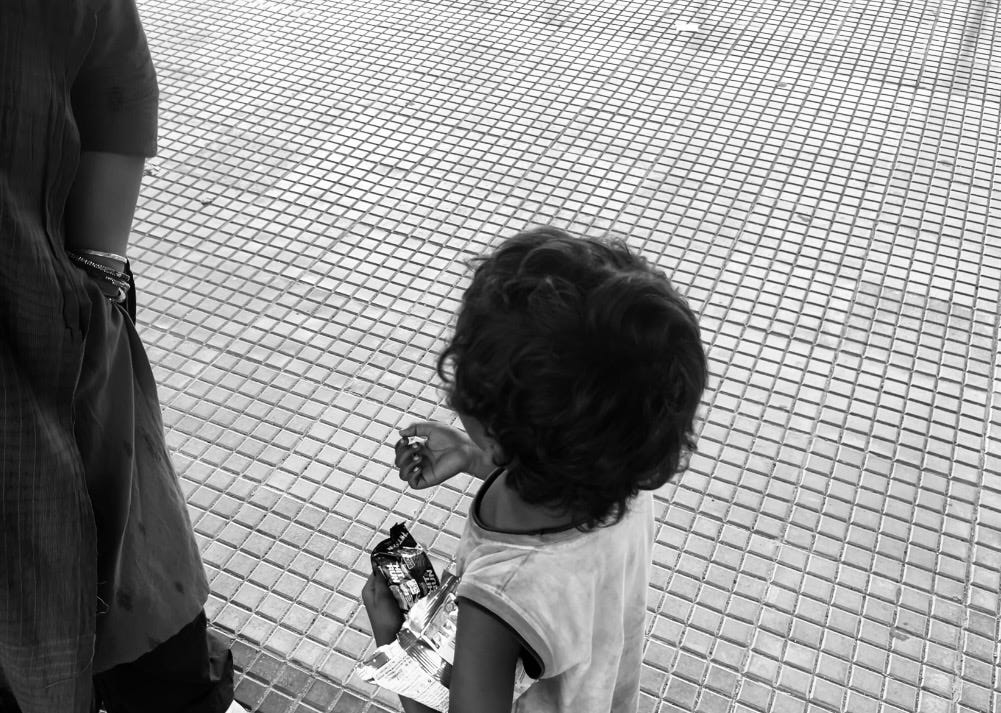
[ translation | badal : cloud ]